Trip Report: Phillips Brothers Mill Tour May 2026
| “Looking to the future while preserving our heritage and timber resources” |
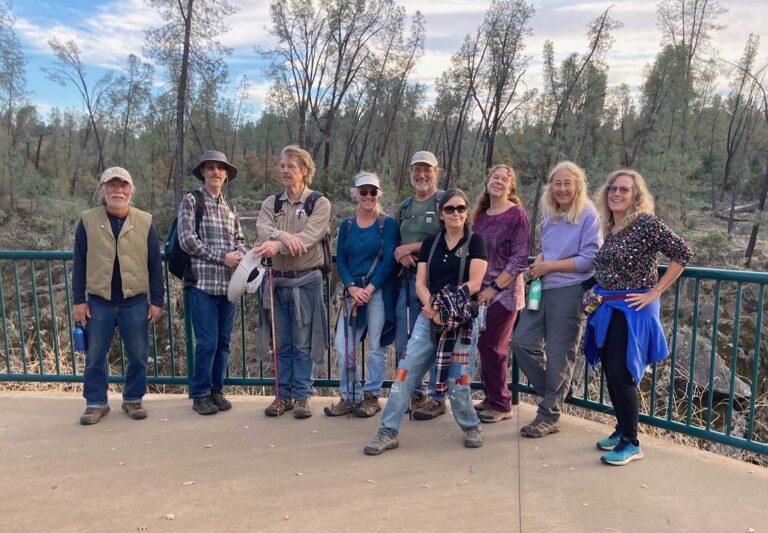
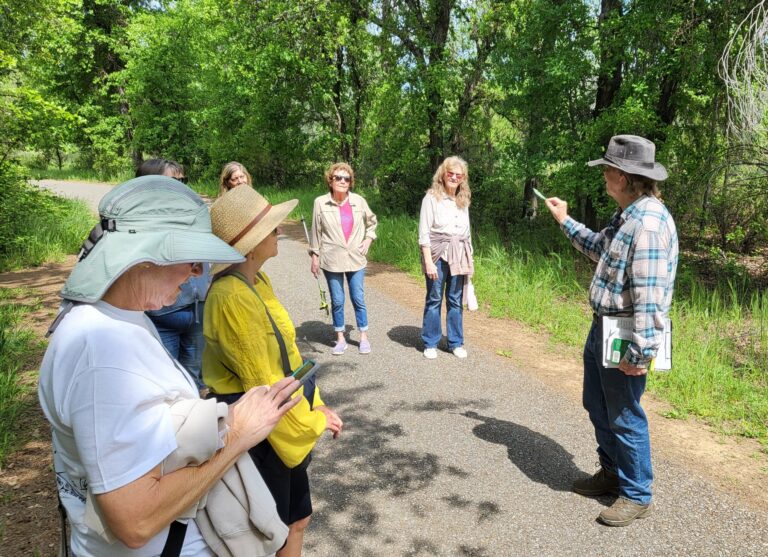
| Tucked into the mixed conifer forest in Oak Run sits the Phillips Brothers Mill, a fully steam-powered sawmill still operating today, much like it has since its 1897 founding. On May 31 we were fortunate to attend a tour of this historical operation led by Mill Manager Gregg Hendrix. With a humble demeanor, Gregg enchanted us with personal stories about the mill that were imbued with a deep connection to the land and appreciation for his heritage. Our morning began with a brief history of the sawmill, which was established by Gregg’s great-grandfather, Edmund Phillips. He spoke tenderly about his uncles who ran the mill when he was child, and who, after returning from World War II, decided to completely exit the lumber business and shift to making wooden fruit boxes instead. They built a steam-powered box factory and never looked back. Fruit growers eventually switched to cardboard boxes, so the mill pivoted to making custom decorative gift boxes, which are still being made today. |
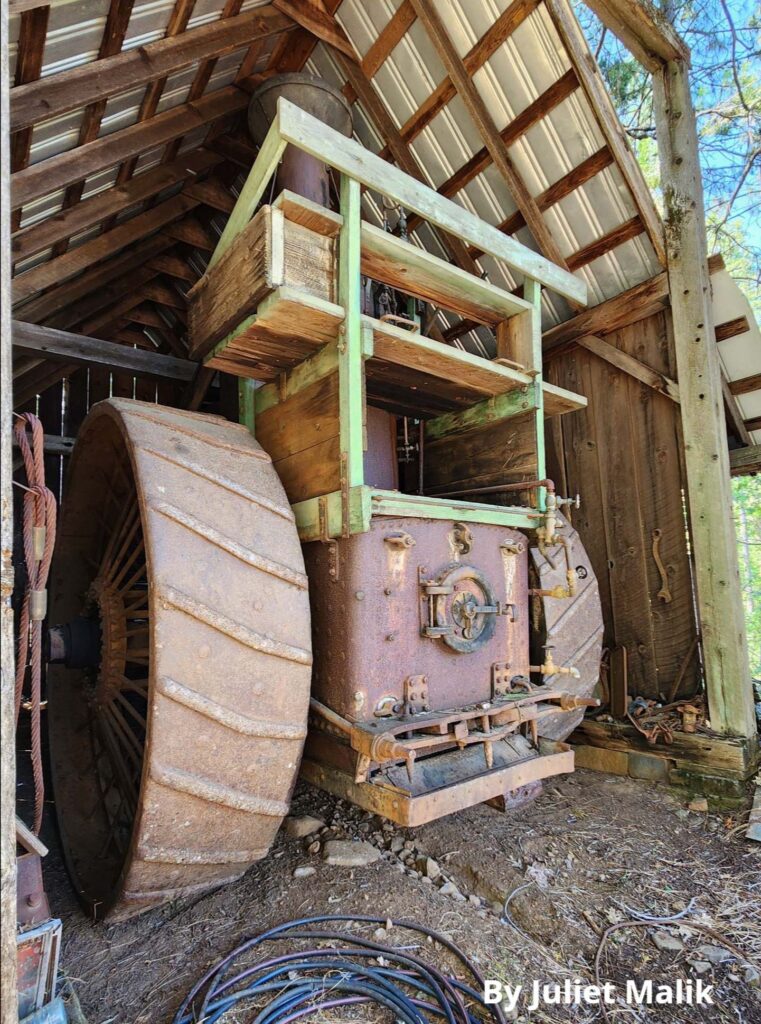
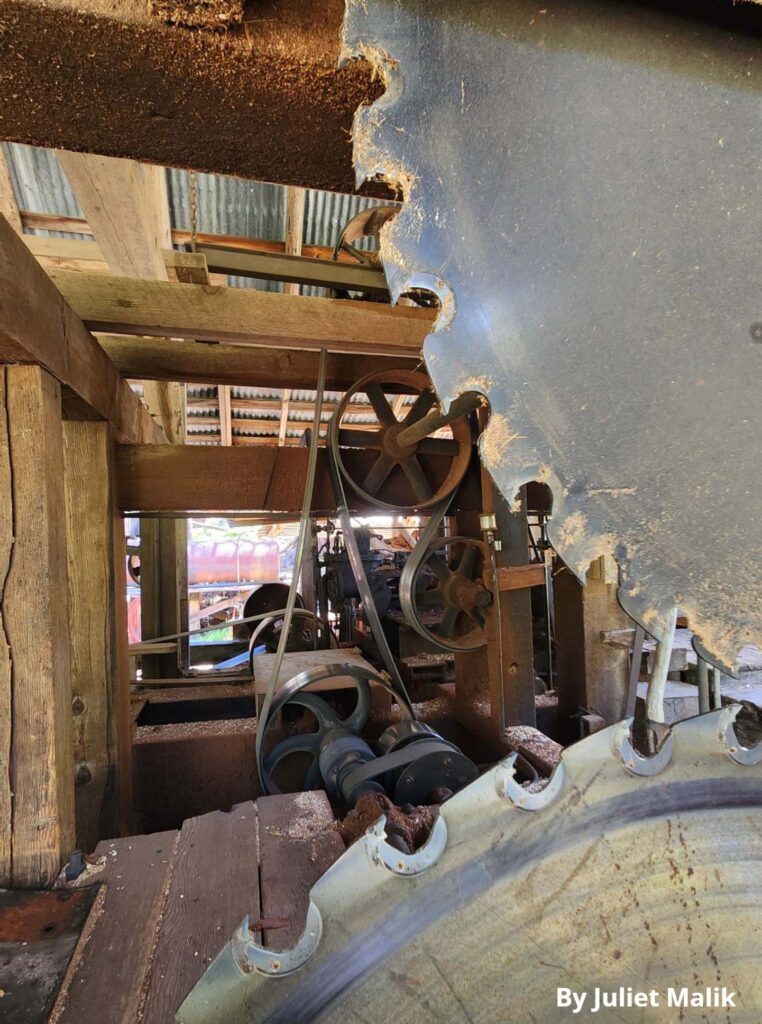
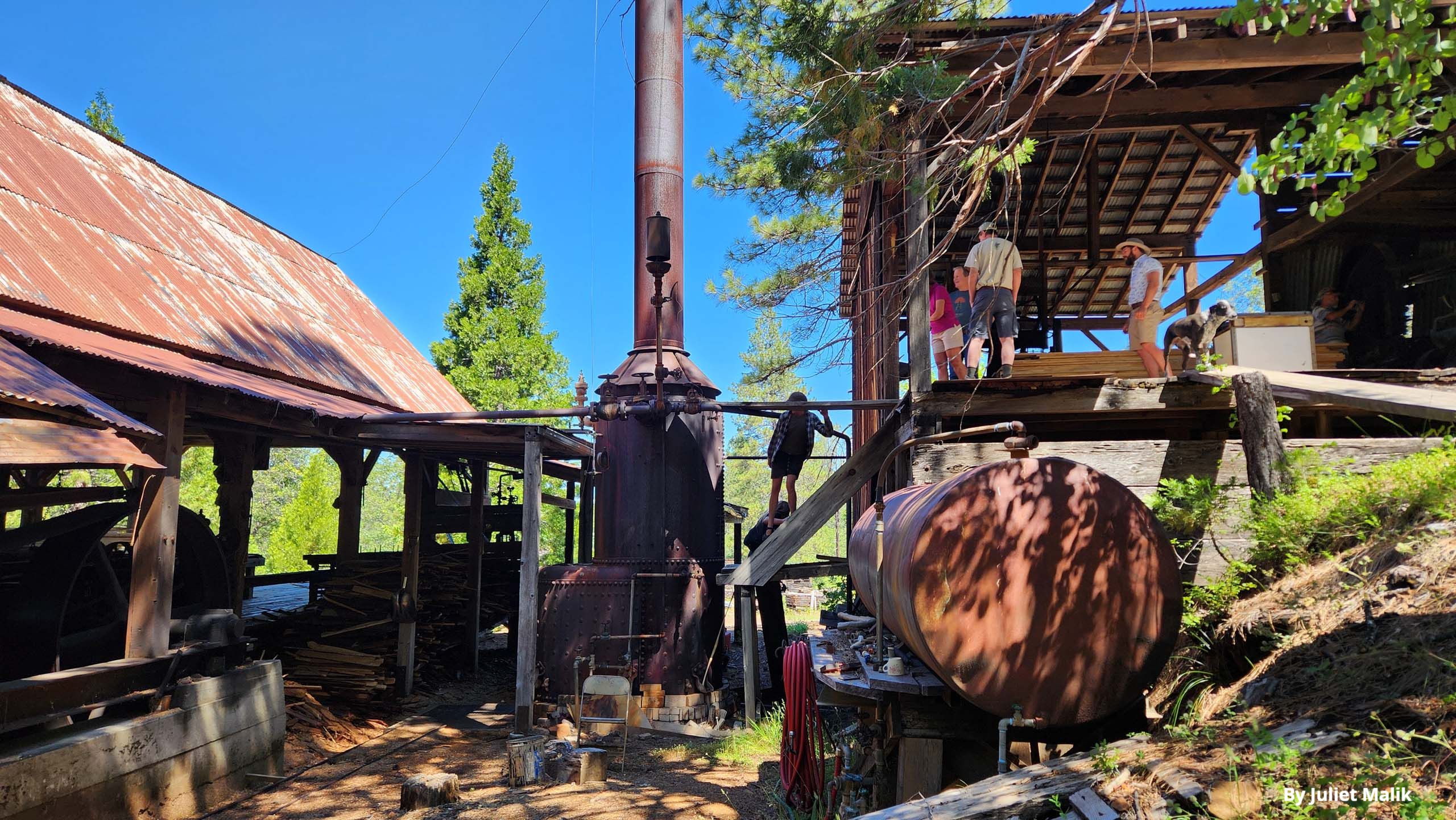
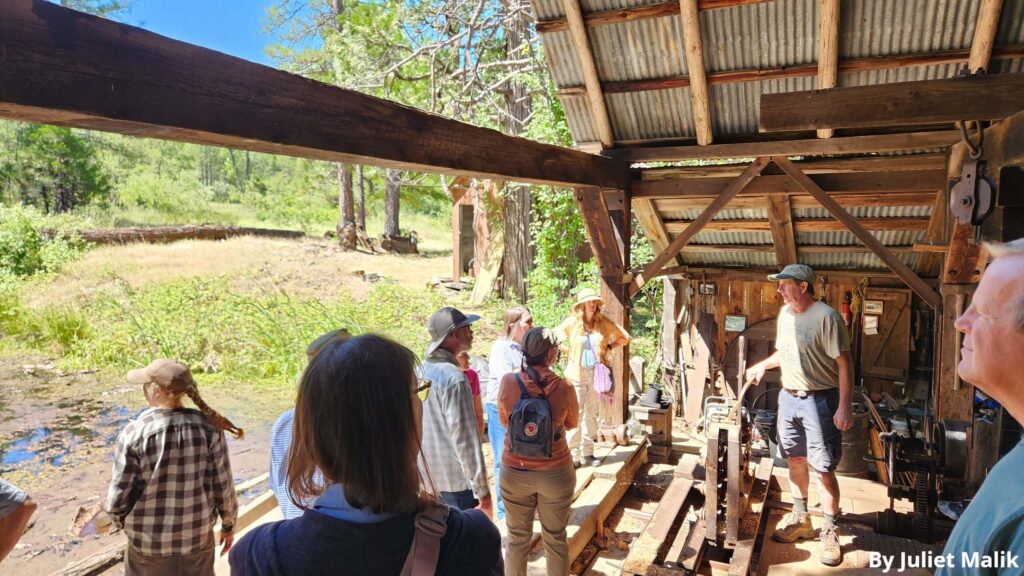
Our first stop on the tour was to what might be the company’s greatest pride and joy: an enormous, still-operational 1906 steam-powered traction engine. Capable of pulling up to 270,000 pounds, it hauled its last load of logs in 1955, but occasionally Gregg fires it up (a four-hour process) to give rides to family members. Next, we toured the two buildings that house the circular saw mill, built in 1933, and other antique machines. All the machines are powered by steam engines beneath the floor. A massive 1920 Willamette boiler fueled by the sawmill’s wood waste energizes all of the steam engines.
We asked Gregg about the work involved to keep these 19th century machines running, to which he responded, “these machines were built to last;” a notable understatement in our current hyper-disposable culture. It became very clear to our group as he explained how logs are processed and the maintenance and repair the machines require, that multiple skill sets are needed for this self-sufficient operation. Throughout his life at the mill, Gregg has learned to be a timber faller, truck driver, mechanic, welder, sawyer, saw filer, plumber, and electrician, to name just a few of his acquired skills. His uncles taught him young to figure out how to fix and build things himself, rather than pay someone else to do it.
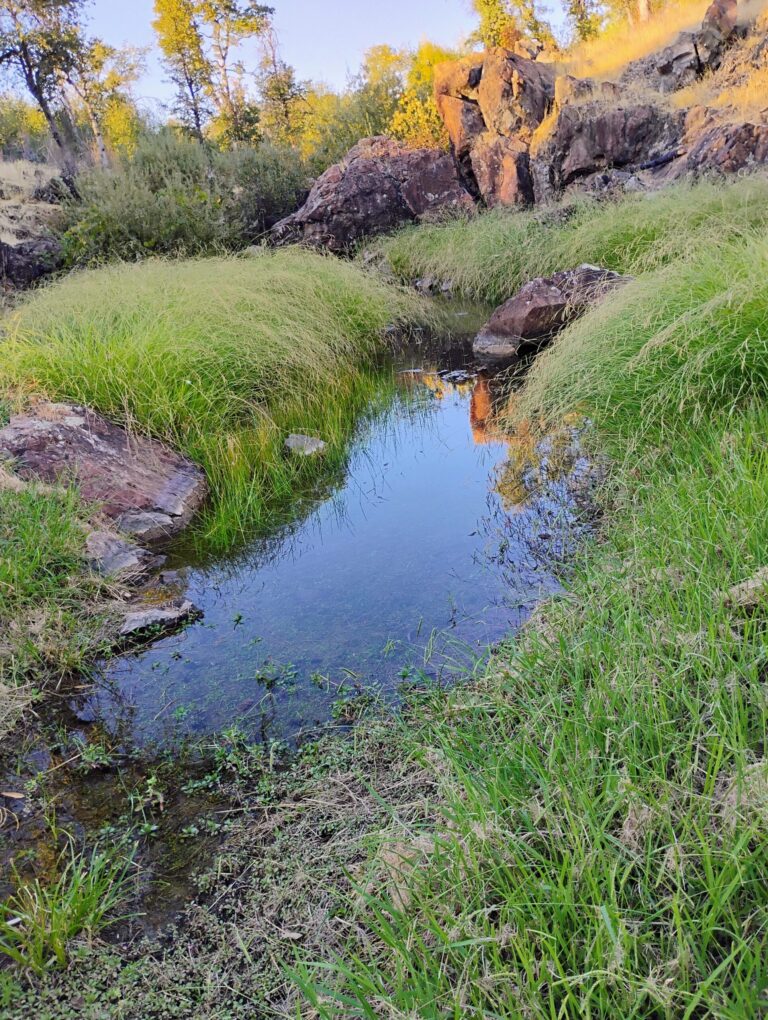
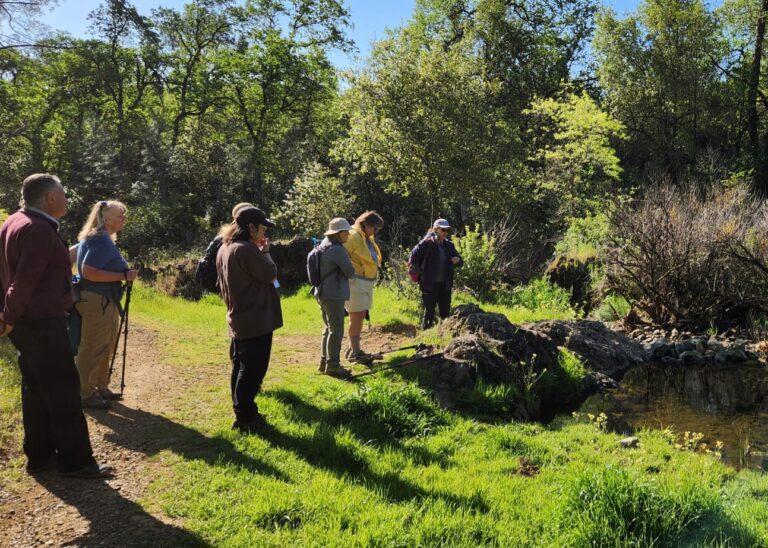
Our final stop on the official tour was the box factory. On the way over we admired the superb mariposa lilies along the trail and the spring-fed pond that Gregg had dug a few years ago. Native willows and cattails are growing around the pond, providing more habitat for local wildlife, including migrating geese. At about 22 feet deep, this clean blue body of water also serves as a family swimming refuge in the summer and as the water source for a sprinkler system Gregg is constructing to protect the mill from wildfire.
In the box factory, Gregg showed us the machines used to build the gift boxes and other products like bird and bat houses, bird feeders, and salmon planks –all decorated with his father’s artwork. Much of the box factory’s products use blue stained pine, which is a beautiful outcome of a destructive natural process. The blue staining is caused by a fungus carried by the mountain pine beetle that prevents the flow of water and nutrients in the tree’s phloem. This weakens and often kills the tree, but does not impact the integrity of the wood.
This tour was both engaging and restorative. While exploring this living history under a clear blue sky filled with birdsong, it was comforting to know that the mill’s 920 acres of forest will remain sustainably managed in perpetuity due to its placement in a conservation easement with the Pacific Forest Trust. It was an experience that was well worth the time and miles traveled, so much so that we plan to make this an annual event. If you missed it this year, please check back next spring.