Trip Report: Sloppy Joe Spring Edition
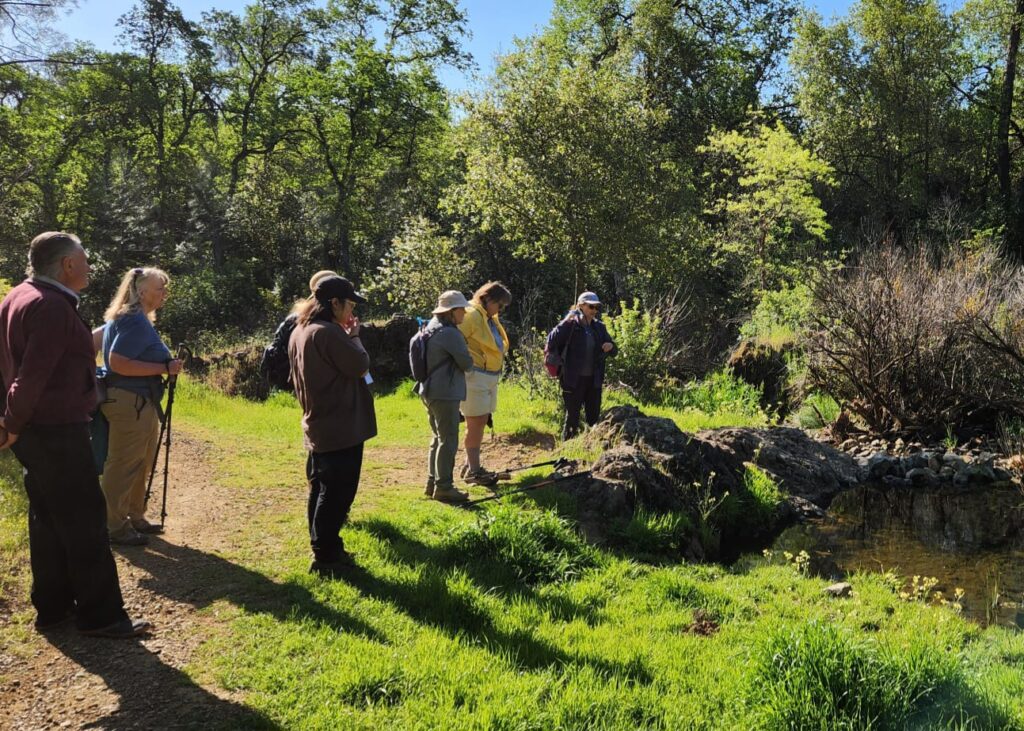
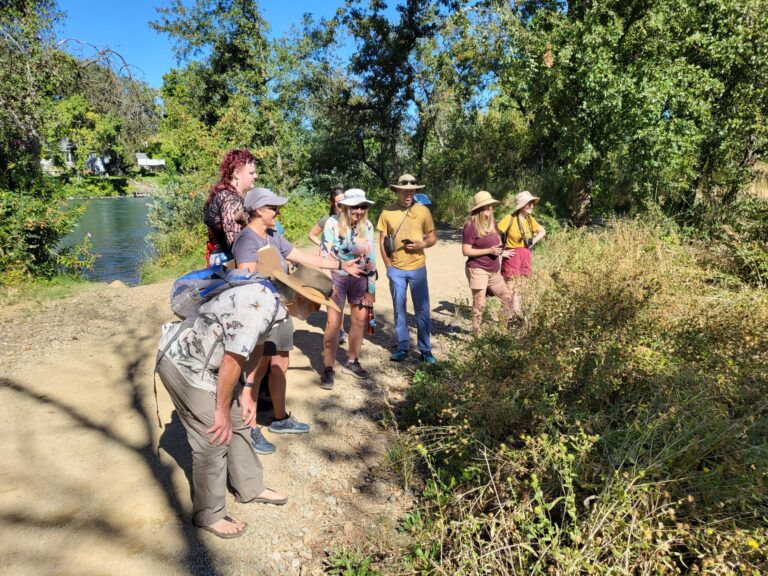
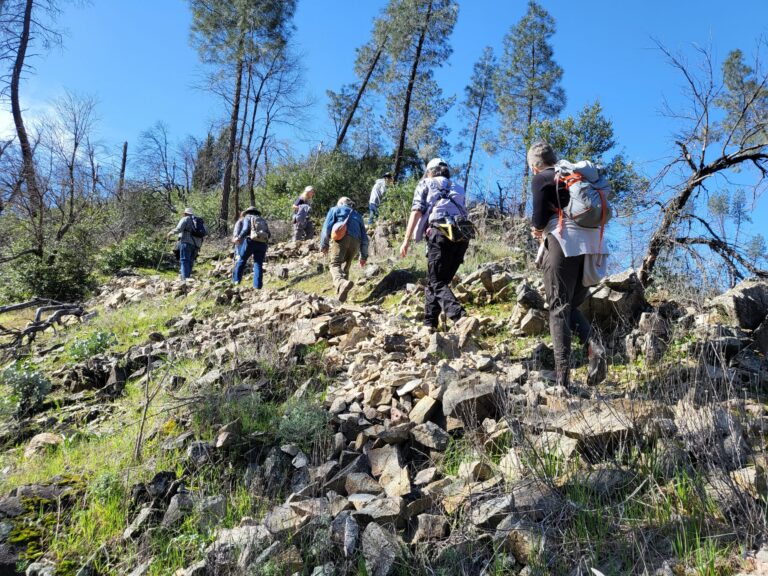
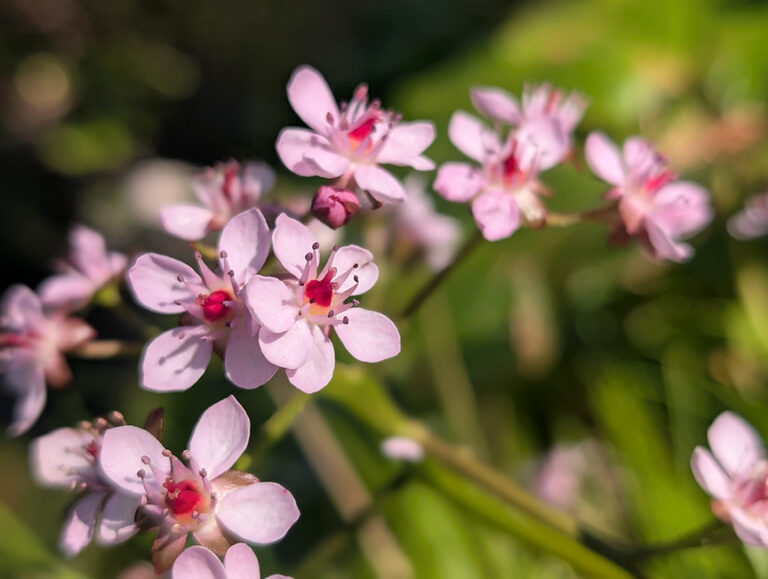
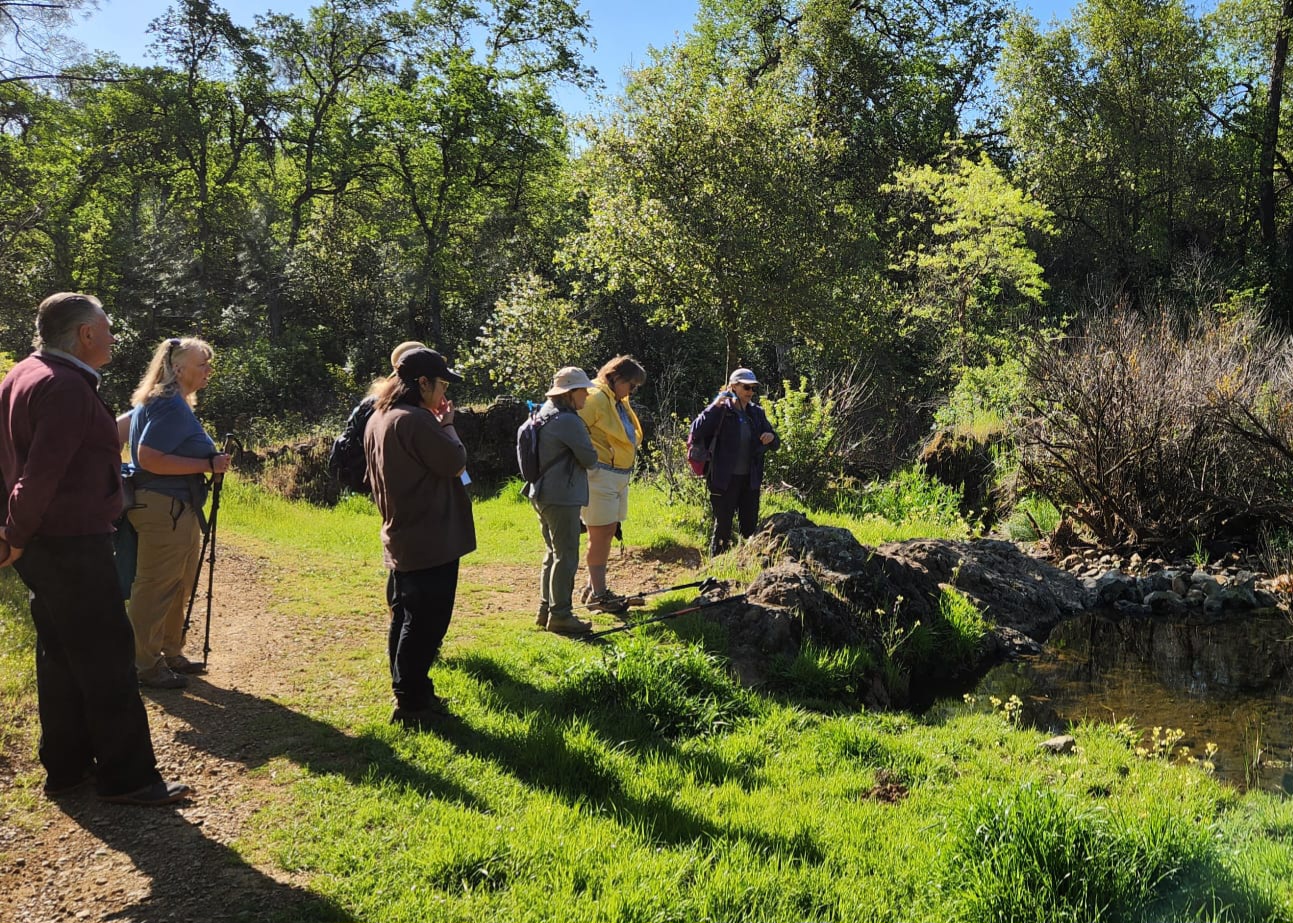
We had a small group of 7 hikers on April 13th who joined Juliet Malik for a 3.5 mile hike along the Sloppy Joe and T-Party trails in west Redding. It was a beautiful spring morning with plenty of green growth and emerging wildflowers along the seasonal creek and in the oak woodland. Some highlights included the spotting of an orange crowned warbler singing its heart out, a poison oak vine that wrapped so densely around a blue oak it resembled English ivy, patches of white meadowfoam (Limnanthes alba), blooming mule’s ears (Wyethia sp.), tomcat clover (Trifolium willdenovii), woollyfruit desert parsley (lomatium dasycarpum), and some canoodling ladybugs in a mugwort plant (Artemisia douglasiana)!
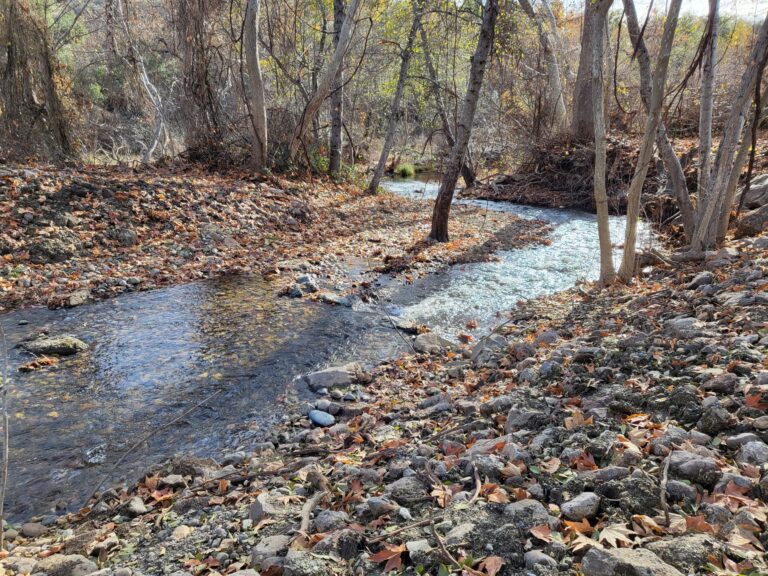
We discussed stream types –perennial streams flow year-round, intermittent streams are seasonal but get flow from both groundwater and precipitation, and ephemeral streams are seasonally charged solely by precipitation. The small creeks in this trail system are possibly ephemeral as they dry up pretty quickly after the rains have stopped. Regardless, they host a bounty of riparian vegetation and provide great habitat for Pacific chorus frogs during their breeding season.
Juliet shared her love for these small and very vocal creatures who have adapted to these short-lived water sources. As the water dries up they move upland to find other water sources or shaded habitat to spend the day, and they keep their bodies moist by secreting a waxy coating. Pacific chorus frogs are also called Pacific tree frogs because they have sticky toe pads to help them climb to great heights to find food. By the end of the hike the group got to hear a little call and response between some male frogs. Their springtime singing is often a mating call but could also be a territorial display. The females lay clutches of hundreds of eggs to increase the chances of survival against their many predators and other threats. These creatures help control slug and insect populations and we can do our part to support them by eliminating toxic yard and home maintenance products that eventually make it into the local waterways as well as by encouraging our community and local leaders to protect these sensitive habitats.